For more than 150 years, Nordic Sugar's factories in Nykøbing and Nakskov have been a central part of Lolland-Falster's industry. Now the company wants to take on an even greater responsibility for driving development in the region - not only as a large workplace but also as a catalyst for growth in both industry and agriculture.
When mentioning Lolland-Falster, the conversation often quickly turns to sugar. Sugar production has been an inseparable part of the region's history, and today Nordic Sugar continues to play a central role as one of the largest private employers on the South Sea Islands.
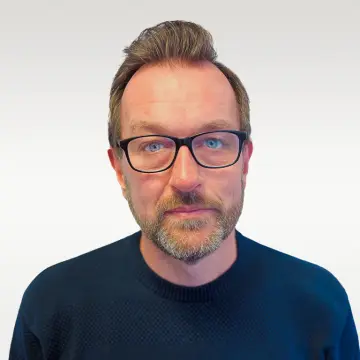
But according to the CEO of Nordic Sugar, Jannik Olejas, it is not enough to be an industrial historical bastion. The company has an ambition to take an active role in regional development and ensure that Lolland-Falster becomes an attractive place for both industry, agriculture, and workforce.
- We will continue to not just be a factory that drives production. We want to be a driving force for growth and development in the region. We feel a responsibility to contribute to the area developing positively - both for our own sake and for the local community's, says Jannik Olejas.
New in the boss's chair
He has been in the boss's chair at Nordic Sugar since New Year, but it is the company he grew up in. And he knows well the history behind the sugar on Lolland-Falster. The interview takes place in Ørestaden, where Nordic Sugar has its headquarters. But while there are about 70 people in Copenhagen, there are several hundred at the factories in Nykøbing and Nakskov. The headquarters exudes sugar factories. There are large pictures of the production and the large factories on many of the walls.
To illustrate Nordic Sugar's significance for the region, he uses a simple yet striking image. While he was the director of Mackay Sugar in Australia, he spoke at a conference on regional development and green transition, but he didn't show a PowerPoint with strategies and future visions. Instead, he found an image of the sugar factory in Nakskov on Google Earth and projected it onto the screen.
- I said: 'This is sugar.' And then I asked: 'Where is the factory located?' It's in the middle of the town. Why? Because there was no town before the factory came. The factory created the town - not the other way around.
For Olejas, it's an image of what Nordic Sugar has done for 150 years - not only in Denmark but also in other countries. The factory is not just a production unit. It is a central part of the local ecosystem, both economically, socially, and culturally.
Nordic Sugar has a naturally close collaboration with agriculture. Sugar beet cultivation is one of the most value-creating crops in Denmark, and the factories in Nykøbing Falster and Nakskov depend on the local farmers. But the company sees potential to expand the collaboration further.
Seeing the opportunities
- We want to be part of further development - also for the benefit of agriculture. Sugar beets are not just sugar, as we all know it - there are many other applications. We are looking, among other things, at how we can use the beet fibres for biogas, protein feed, or other green solutions. There is great potential, and we also want to explore such opportunities.
Similarly, Nordic Sugar is working on better utilising by-products from production. Already today, the company supplies surplus heat to the local heating network from the factory in Nykøbing, and soon the same will happen from the factory in Nakskov. But according to Olejas, more can be done to ensure sustainable use of resources.
- We have a responsibility to use our resources as wisely as possible. If we can create value from by-products of sugar production, it benefits both us and society. We must constantly think of new solutions.
When you talk to Jannik Olejas, one thing is clear: He focuses on opportunities rather than challenges.
- I am not employed to see limitations. I am employed to find solutions and see opportunities. If we only focus on what is difficult, we will get nowhere.
This approach also influences his view on the development of Lolland-Falster.
- Of course, there are challenges, but we must find ways to turn them into opportunities. We cannot sit and wait for someone else to do something - we must take the initiative ourselves.
Trains should stop in Nykøbing
One of the major decisions that could impact the region's development is where the international trains on the Femern connection should stop. Originally, there were four stations in consideration - Nykøbing Falster, Vordingborg, Næstved, and Ringsted - but now Køge and Holeby (Rødby Station) are also being considered.
For Nordic Sugar, it is also a discussion that matters.
- For us, it makes the most sense if the train stops in Nykøbing. It will make it easier for employees to commute, and it will better connect the region with the rest of the country, and a better train connection will make it easier to attract qualified labour from Copenhagen.
- I am not productive when I drive on the motorway to Nykøbing. If I could take a high-speed train and use the time to work, it would be a benefit for me in my job. And I think it would also apply to many others.
These are some of the processes the company has in mind:
- If there is a hearing or an opportunity to influence the decision, we must be ready to argue for what benefits our business and the region best.
Will lift the entire area
Nordic Sugar has been a central part of Lolland-Falster's industry for 150 years, and it must continue to be so. With a long-term perspective.
- We must think long-term. If we do it right, we can create growth - not only for Nordic Sugar but for the entire region.
The sugar factories in Nakskov and Nykøbing originally started as the hearts of the towns. Now Nordic Sugar wants to take on that role again - not only to secure its own future but to lift the entire area.
- If we optimise our resources and invest in people, technology, and infrastructure, we can become an even stronger driving force for the region. It is not just something we want - it is something we feel responsible for.