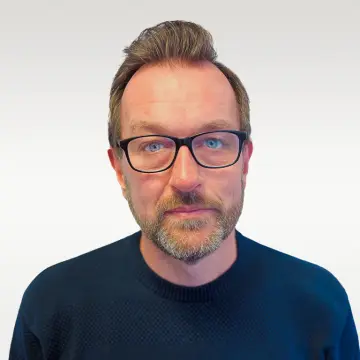
What does the future look like for businesses in Vordingborg, Lolland, and Guldborgsund Municipalities? That question is posed by FemernBusiness to the mayors Mikael Smed (Vordingborg), Holger Schou Rasmussen (Lolland), and Simon Hansen (Guldborgsund).
Each mayor has been asked to address three questions about business development in their own municipality as well as three overarching questions about the region's future growth leading up to and after the establishment of the Fehmarn connection. Vordingborg Municipality is heavily investing in the green transition and business development, where the Fehmarn connection plays a key role in creating growth and new opportunities. Here, the focus is on business development in Vordingborg Municipality with Mayor Mikael Smed (S).
Vordingborg's Business Master Plan 2030 mentions the ambition to become Eastern Denmark's powerhouse for green energy. How do you see the Fehmarn connection supporting this ambition?
- The Fehmarn connection provides companies with better logistical opportunities. It creates a great opportunity to transport goods and people more efficiently. It is also about the potential in education, where young people have better opportunities to pursue an education south of the border, also within the green sector.
There is broad political consensus in the municipal council that growth should come within the green transition and green energy. Vordingborg's location with a commercial port, train connections, power grid, and highway means that we are well-equipped. We need to collaborate with Lolland and Guldborgsund to exploit this opportunity rather than compete.
The proportion of growth and export companies in Vordingborg is lower than the national average. How will the municipality work to attract more export-oriented companies?
- That is the big question worth a billion kroner. We use Business Vordingborg to help us make the municipality more attractive. If we want to attract large industrial companies, we must be able to offer the whole package: green energy, infrastructure, and qualified labor.
The green infrastructure is a strength, and we have already taken steps to support the industry's needs. For example, we have brought the process operator education (ZBC) to the local technical school because companies have requested it. With solar panels and wind turbines, we ensure plenty of green energy, which is attractive to companies.
According to your master plan, 1,000 new jobs are to be created by 2030. How will you achieve this?
- We need a broad and dynamic labor market where the green transition plays a central role. Whether it becomes 850 or 1,250 new jobs is less important. The most important thing is that we actively work to create jobs.
Some of these jobs will come from existing companies, while others will come from new companies we attract. We also need to get better at getting foreign citizens into jobs. We have already done well in getting Ukrainians into work, where we rank high compared to other municipalities in the country.
How do you see the Fehmarn connection affecting business and trade in the area over the next ten years?
- I expect that the connection will create growth in business and make working life more diverse. In ten years, we will have gotten used to it, and it will affect us on many levels. But it requires that we are ready.
We need to focus on onboarding labor and companies. The tourism industry will also be affected, as over 50 percent of our tourists already come from abroad, mostly from Germany. We have a unique nature on Møn, which very few can compete with. We are already working on establishing parking for motorhomes at our ports and general mobility plans to handle more tourists in the future. There is also potential in new collaborations within culture and education. We need to be selective and pursue the right opportunities. A good collaboration with German companies will be an advantage. Our tourists want experiences, and we can compete on that. There is great potential for many industries, and companies must be ready to seize the new opportunities.
Labor is a critical factor for many businesses.
How do you solve this challenge across municipal and national borders?
- There are no easy solutions or quick answers.
Unemployment is low, so we need to work on attracting labor.
An important factor is to create an attractive local community with
good housing, schools, and youth life. We as a municipality can contribute to this, but
businesses also need to be interesting workplaces.
And when we talk about foreign labor, an
international school is certainly an option. There needs to be a demand, but
the experiences from Lolland are positive. And we already have an international
teacher education.
Critics say that the Fehmarn Belt connection will not benefit
the business community in the Fehmarn region (except for tourism). That it will just
become an area you drive through to get from Copenhagen to Hamburg. Are they right?
- One might fear that we are not ready, and that we do not attract
the right businesses. If there are no businesses, then there is also no one
moving here.
But we can see that there is generally a lot of business along the highways. We are already well positioned, though without a terminus at a ferry port. But with a direct route to Hamburg, we will be even better positioned. It is a huge transport artery, and we are in the middle of it.
The worst that can happen is that we are not skilled enough to attract the right companies. Therefore, I have tried to bring together the municipalities from Køge to Lolland in a collaboration so that we can develop together. We need to grow bigger together. We agree that we need to stand together, but we probably don't quite agree on how to do it.