Companies must adapt to changing market conditions and technological transformations. And there is a prospect of a golden period with great opportunities, according to Michael Bang
What is the business community on Lolland-Falster and South Zealand expecting in 2025? We have asked several key figures with their fingers on the pulse. First, Allan Aaskov, director of Lollands Bank, gave his perspective focusing on economic growth and the significance of the Fehmarn project. Then Helene Urth, director of Business Vordingborg, pointed to green investments and the challenge of labor.
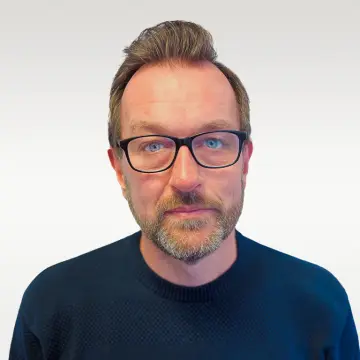
Now it is Michael Bang, CEO of CELF, who shares his thoughts. He sees great opportunities in upgrading the region's workforce to meet new needs - but also challenges if companies are not ready to invest in skill development and retain talents.
What trends do you see for the business community on Lolland, Falster, and South Zealand in 2025?
- Overall, there is reason for optimism. The economic growth in the region is largely driven by the Fehmarn connection, which is now truly making its mark on the area. The permanent establishment of the element factory is an important piece in the development and will create a foundation for both direct and indirect business opportunities. Additionally, we also see that upcoming infrastructure projects, such as the Green Gas pipeline, will attract companies that want to be close to this development. All in all, it suggests that the business community in the region is strong in the coming years.
Which sectors do you think will experience growth in the coming year, and why?
- The construction sector will continue to experience a high level of activity. The work on the Fehmarn Belt connection will continue at full speed, creating demand for both main contractors, subcontractors, and associated companies. There is also a great need for services for construction projects, which provides opportunities for a wide range of local businesses.
The element factory, which has so far been linked to the Fehmarn project, is also opening up for new applications in the future. It can become an important focal point for business development, where new production or logistics solutions can emerge in the area.
At the same time, the green transition continues to drive several sectors. This is especially true for the energy sector, where projects related to renewable energy and energy infrastructure are underway. The green agenda is also reflected in the education sector - for example, at CELF, where there is an increased focus on further education and upskilling in green competencies. The development in the number of jobs in Lolland Municipality is a clear indicator of the positive growth we see in the region.
Which sectors will struggle?
- The expectation is that most sectors can do well as long as companies are adaptable and invest in the development of their employees. It's about being able to adapt to changing market conditions and technological changes. If this adaptability is in place, there is a prospect of a golden period with great opportunities. However, companies that fail to keep up with developments risk falling behind.
What are the biggest challenges companies in the area face in 2025?
Michael Bang
Blue Book: Michael Bang
Director at CELF (Center for Vocational Education Lolland-Falster)
Additionally:
Chairman of the Board, Middelaldercentret (since April 2016)
Board Member, VUC Storstrøm (since 2008)
Vice Chairman, Foundation for Entrepreneurship - Zealand (since 2018)
Member of the Femern Belt Committee (since 2008)
Member of the Representative Council, Business Lolland-Falster (since 2008)
- One of the biggest challenges is still the shortage of labor. Skilled workers are particularly in demand, but in general, it will be difficult to find qualified employees. The demographic development in the region means that we cannot rely solely on the local workforce. Companies will need to attract labor from outside - both from other parts of Denmark and from abroad.
COWI has made a report for Lolland Municipality, predicting a significant labor shortage in the coming years. When it's a problem there, it's likely also in the rest of the region. How do we solve it?
- The solution requires a multifaceted approach. Firstly, we must ensure that all young people become an active part of the labor market through education and job opportunities. However, there are not enough local young people to meet the demand, so we must continue to attract foreign labor. This can include new residents settling in the region and workers commuting to the area from other municipalities in Denmark. Several nearby municipalities have not experienced the same employment growth as Lolland-Falster, so there may be potential to attract labor from there.
How can companies prepare themselves to take advantage of new opportunities in the region?
- Companies should actively keep track of the investments taking place in the area. Investors acquiring building plots and properties - especially around the element factory - often signal upcoming development projects. The tourism industry is also growing. Finally, the green transition will continue to create growth opportunities.