Analysis: Fehmarn has a new minister. But who is really in charge?
Signe Munk takes over political responsibility for Denmark’s largest construction project. But Fehmarn is now as much about governance, trust and the power of Sund & Bælt as it is about delays on the seabed.
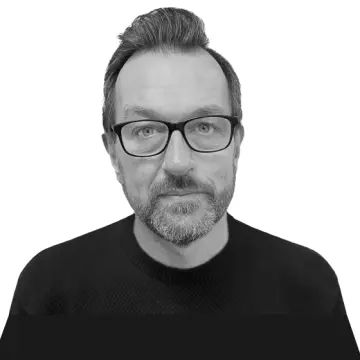
Signe Munk is the new Minister for Cities, Rural Districts and Transport. Photo: Sund & Bælt and the Danish Parliament
Denmark has a new government, and the Fehmarnbelt link has a new ministerial owner. Signe Munk of the Socialist People’s Party is the new minister for urban affairs, rural affairs and transport, putting Denmark’s largest infrastructure project under fresh political responsibility. The question is how much power comes with that responsibility. In recent years, the Fehmarn project has become a case in which key explanations, timetables and conflicts have increasingly been shaped by Sund & Bælt, the state-owned infrastructure company, while political leadership has struggled to assert itself.
That makes the change of minister significant. Munk, 36, does not arrive with the profile of a heavyweight transport politician. She has served as her party’s political spokesperson and climate spokesperson, and her political identity has been shaped more by welfare, nature, children, local communities and the promise of a calmer everyday life than by motorways, railways and state-owned infrastructure companies. Fehmarn is therefore an unusually demanding first test. The project requires a minister able to read the power structure in a system where billions of kroner, civil servants, state-owned companies, international contractors and a broad cross-party political agreement are tightly intertwined.
The central question is no longer only when the tunnel will open. It is also who is actually running the project. On paper, the chain of responsibility is straightforward: the transport ministry owns Sund & Bælt, Sund & Bælt owns Femern A/S, and Femern A/S is the client in relation to the main contractor, Femern Link Contractors, or FLC. In practice, the project has increasingly come to be defined by Sund & Bælt, with announcements about timetables, conflicts, negotiations and finances coming from the state-owned company, while political leadership has struggled to break through. That is the structure Munk now inherits.
Munk takes over after a ministerial period in which Thomas Danielsen of Venstre, Denmark’s Liberal party, never appeared to take firm control of the case. For a long time, the political handling was marked by trust in the companies behind the project and cautious public statements, while the problems grew on the seabed, in the contracts and in the relationship between the client and the main contractor. Sund & Bælt held on to 2029 as the official opening year, even as internal status reports, the absence of a shared timetable and the contractor’s growing claims pointed in another direction. Only when that story could no longer be sustained was it officially acknowledged that a 2029 opening was no longer realistic. In reality, that had been the situation for several years.
The political parties behind the Femern agreement
The political parties behind the Femern Belt project are the Social Democrats, Venstre, SF, the Conservative People's Party, the Danish People's Party, Liberal Alliance and the Danish Social Liberal Party.
Danielsen thus became minister during the period when the official narrative around the Fehmarn project began to crack in earnest. He was also minister at a time when the transport ministry’s civil service and Sund & Bælt played an increasingly prominent role in the handling of the case. That became clear when the French ambassador sought a meeting with the minister about concerns at Vinci, the French construction group that is one of the key companies in FLC. The meeting was refused, and the ambassador was referred further into the system. Such episodes leave the impression of a minister who kept his distance from the conflict as it moved ever closer to the ministry itself.
A protected political consensus
The problem extends beyond the outgoing minister. The Fehmarnbelt link is backed by a broad political agreement, and that broad support has made the project strangely protected. When so many parties have a stake in the story of the tunnel as a historic infrastructure upgrade between Denmark and Germany, there is less appetite for asking the uncomfortable questions. Why was 2029 maintained for so long? Why were the delays not communicated more clearly at an earlier stage? Why did parliament not receive a more precise picture of the conflict between the client and the contractor? And why did it largely take freedom of information requests and internal status reports to reveal the true state of the project?
This is where Munk’s task becomes larger than the project itself. She is taking over a project with a delayed tunnel trench, a delayed immersion vessel and a DKr14.5bn claim from the main contractor. She is also taking over a parliamentary system around the project that has long seemed more focused on preserving calm than on testing the power of Sund & Bælt. The parties behind the agreement have provided political backing for the project. The question is whether they have also provided real scrutiny. The same applies to the transport committee, which in this case has struggled to appear as the place where the ministry and the state-owned companies are forced to give clear answers.
The conflict reached the ministry
That the case had reached the top of the ministry became clear in the written exchange between the transport ministry’s permanent secretary, Jacob Heinsen, and Sébastien Bliaut, managing director of FLC. The sequence began with an approach from Bliaut via LinkedIn. He wanted to meet and discuss concerns around Ivy, the special-purpose vessel used to lower the tunnel elements on to the seabed. The reply came later in an email, in which the ministry made clear it had been informed of a delay of about 20 months in the immersion work.
Heinsen also wrote that the problems with the vessel represented the most significant risk to the project, and that the major delays had raised concerns about whether the consortium was capable of completing it. Those are unusually harsh words in a case where the state is also facing the DKr14.5bn claim, disagreement over the tunnel trench and international arbitration. When the ministry’s top civil servant writes in such terms to the main contractor on Denmark’s largest infrastructure project, it is about far more than irritation over a delayed delivery. It is the state, through its civil service, signalling mistrust towards a contractor on which it is also deeply dependent.
FLC’s reply made the conflict more serious. Bliaut rejected the idea that Heinsen had an accurate basis for his assessment, wrote that the case had not been properly presented to him, and called the situation an administrative crisis. He also pointed to what he saw as the authorities’ apparently uncritical trust in Sund & Bælt as one of the project’s greatest risks. The next day, the letter was withdrawn by the senior management of the companies behind the consortium. The damage had already been done. Within a few days, the conflict had exposed a breach of trust between the state, the client side and the main contractor that reaches far beyond technical problems with a vessel.
That is why Frederik Waage, professor of administrative law at the University of Southern Denmark, read the sequence as more than a hard clash between a ministry and a contractor. In his view, there are grounds to question the management of the entire project. When a foreign ambassador seeks access to the minister, when the permanent secretary then intervenes directly in the conflict with the main contractor, and when billion-kroner claims, arbitration and disagreement over the quality of the tunnel trench are all running at the same time, Fehmarn has become a case about the state’s grip on its own largest infrastructure project.
Munk’s first major test
That is the reality Munk now enters. She takes over a ministry that, on paper, has been given a broader portfolio, but where the heaviest case still sits within transport. A ministry for urban affairs, rural affairs and transport sounds like a collection of policy agendas ranging from urban development and rural districts to motorways, railways, state-owned companies and billion-kroner infrastructure projects. Fehmarn shows why the transport brief carries such weight. It requires a minister who can hold the civil service to account, challenge a state-owned company and understand the political, legal and international consequences of every step.
It may prove to be an advantage that Munk comes from outside the transport establishment. A new minister can ask questions that a system with years invested in its own decisions would rather avoid. She can demand a clearer picture of the timetable, the finances and the conflicts. She can insist that parliament receives more than polished status briefings. She can also break with the pattern in which Sund & Bælt has in practice become the dominant voice in a project that still belongs politically to the minister. That requires her to decide quickly whether she wants to be the active political owner of the Fehmarn case, or simply the next minister receiving the company’s polished explanations.
That is why Fehmarn will be her first major test. She is not expected to solve the technical problems in the tunnel trench or manage seabed work by ministerial magic. She must show whether there is political leadership willing to ask the fundamental questions, and whether the new minister is prepared to challenge a state-owned company that has, in practice, had very wide room to define the problem, the explanation and the solution.